The First Spode Period 1776-1833
It is a paradox that while Josiah Spode I ran his factory for almost 30 years and died a wealthy man, his productions were unmarked and therefore very few of the earliest Spode pieces can be easily identified.
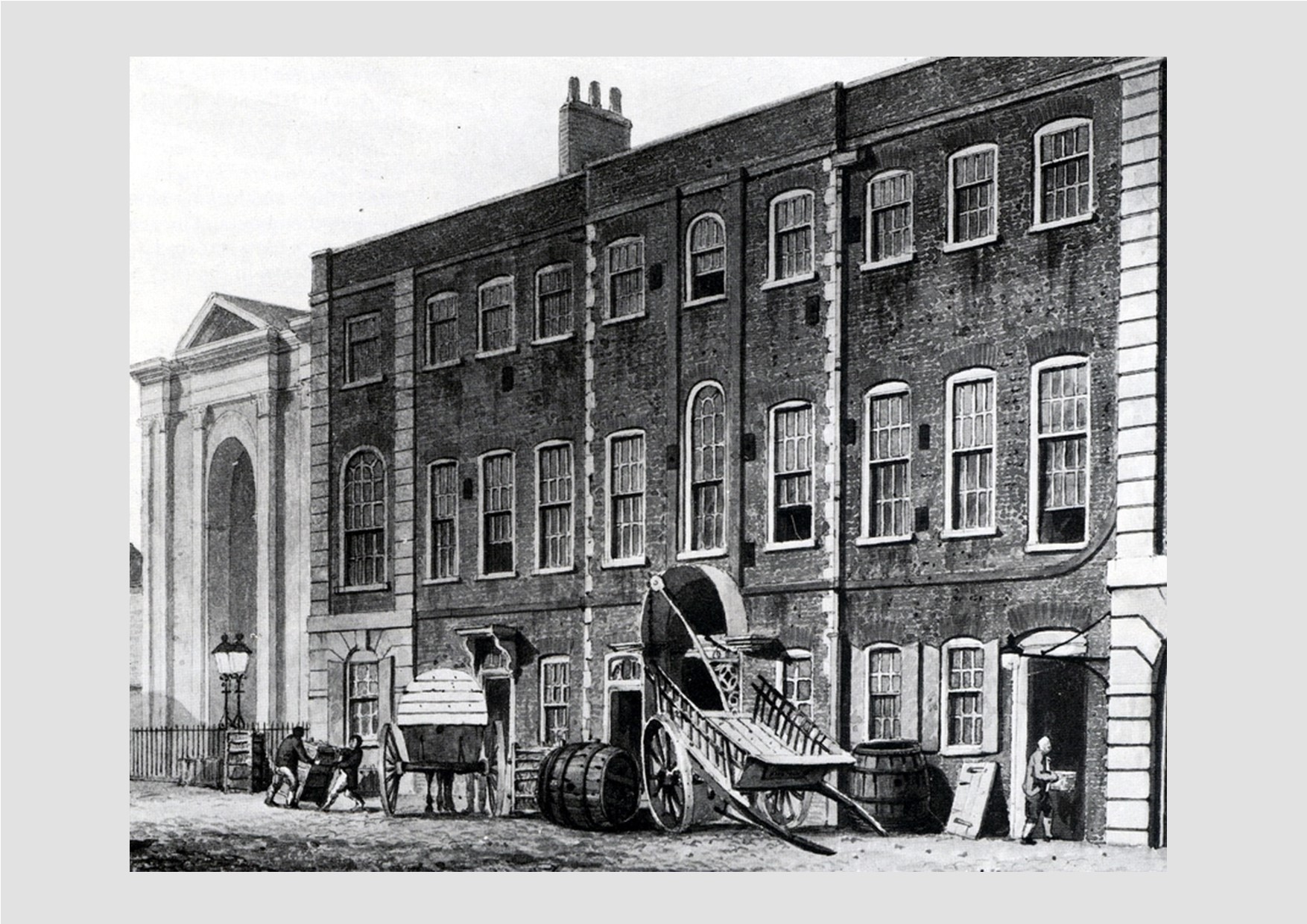
Spode is one of the greatest names of the Industrial Revolution. Josiah Spode I was born in 1733 and after several years working for other local potters, established his own company in 1776 in Church Street, (then known as High Street) Stoke and, like his neighbour and friend Josiah Wedgwood, concentrating on the production of ceramic wares of the finest quality in a variety of bodies.
He is particularly recognised as having developed the technique for underglaze transfer printing on earthenware c.1784 and to have produced the first printed “Willow” patterns 1784-90s. He focused his attention on the manufacture of porcelain, a technically more difficult but much finer material than he had previously made, introducing in 1796 a new type of porcelain which he first called “Stoke China” but shortly afterwards renamed “Bone China”, because of the high proportion of calcined ox-bone in its formula.
Josiah Spode I died suddenly in 1797 and it fell to his son Josiah Spode II to continue and perfect his father’s developments. In partnership with William Copeland, Josiah II continued the business for the next thirty years Under their management in the early 19th century, considered by many to be the “Golden Age” of English ceramics, the company grew to be the largest pottery in Stoke and a pre-eminent manufacturer of fine ceramics of every kind. Spode II was appointed “Potter to the Prince of Wales” when the Prince Regent visited the factory in 1806.
Josiah II’s china bodies, first Bone China and, from 1822, its derivative, Felspar Porcelain, outclassed all other contemporary English porcelains not just in terms of beauty but also of reliability of manufacture. Spode’s Felspar Porcelain is recognised as the forerunner of all modern English Bone China.



As the technique for transfer printing on earthenwares was perfected, Spode’s blue and white transfer printed wares were generally considered to be among the finest ever made. The most famous pattern of which, “Italian”, introduced in 1816, continues to be made in quantity to this day.
The portrait of Josiah Spode II shown below is hand painted on a Spode’s Felspar porcelain plaque, c.1820. It is copied from an earlier painting by Keeling in 1806 and engraved by William Greatbach, chief engraver for Spode.

Also shown on this page are a small selection of typical Spode wares made during this period, demonstrating how designs and shapes evolved from the highly restrained Georgian styles through the more ebullient decorative forms of the Regency period. The pattern books show 5,000 different “standard” patterns were produced during this period, but many more special order patterns were also made.

The Copeland Period Part 1, 1833-1900
William Copeland died in 1826 and Josiah Spode II died in 1828. Until 1833, the company was managed by one of Spode’s sons and other managers.
About the Copeland Period - Part 1