Factory
Josiah Spode l acquired the site in what is now Church Street, Stoke in 1776 and Spode wares were made there continuously until 2008.
Learn moreJosiah Spode l acquired the site in what is now Church Street, Stoke in 1776 and Spode wares were made there continuously until 2008. In the 19th Century it was one of the two largest potteries in Staffordshire, boasting some 22 bottle ovens and employing around a thousand people. Its story is in some ways typical of many factories in the Potteries – wealthy owners, successive generations of families working there, heavy pollution, child labour, industrial diseases, low life expectancy. Paradoxically, some of the most beautiful ceramic objects ever produced were made there, and were recognised as such throughout the world.

The scale model above is of the Spode site as it was in 1834 and is made up of over 100 ceramic pieces, made in the same year. This astonishing model is one of the Spode Museum’s rarest possessions, no other similar model is known anywhere.
The Spode site is also still rich in historic buildings from Josiah ll’s time (1797-1828), including the china terrace, the mould stores and the building which housed a Boulton and Watt beam engine from 1810. Many of these have changed little since they were built and features such as clay lifts, mould stores, china painters’ studios and the counting house can still be seen in more or less their original forms. The unaltered condition of the interiors of some of the buildings since the 19th century adds to the uniqueness of the site.


The historic Spode factory is, along with the Coalport works at Ironbridge and the Davenport Works at Longport, one of the last two remaining “great name” ceramics factories from the Industrial Revolution—Wedgwood’s Etruria is all but gone, Minton at Stoke was demolished in recent years and a super-market now stands on the site, the early Worcester and Derby factories are long gone.
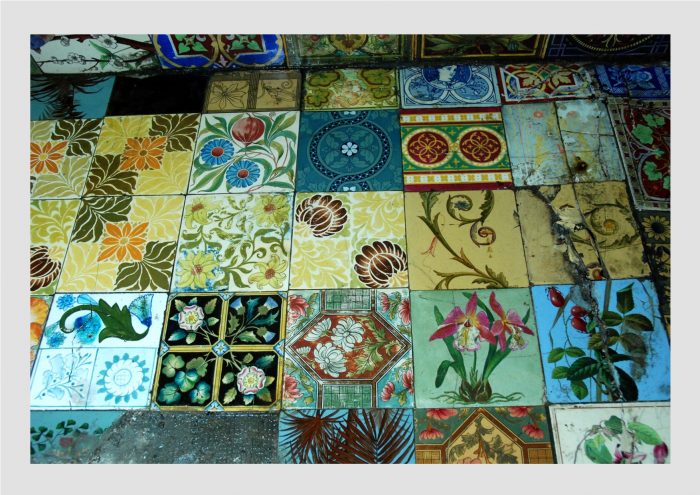
One of the unique features of the Spode site is the China Clay Cellar below the China Terrace which had been ‘wallpapered’ on walls and floor with tiles during the Victorian era to avoid contamination of the china clay that was stored there. The tiles were presumably seconds or ends of lines, because they are laid haphazardly in a variety of patterns. They give a snapshot of Copeland’s tile production at a particular time (c.1880)
The site is likely to offer an archaeological feast. Various small excavations in past decades have unearthed thousands of shards and wasters from the late eighteenth and nineteenth centuries, but little from Josiah I’s time or earlier (the site had been a potworks since the 1740s). It is a paradox that although Josiah I died a very rich man after twenty years of production at his factory, to this day very little of what he produced has been positively identified – whatever shards might be found beneath the Spode site could provide the basis for identifying much more.
In recent years, the condition of many of the buildings on the Spode site has deteriorated, especially after 2008 when Spode ceased manufacturing. In 2016, the owner of the site, Stoke on Trent City Council, commenced a major regeneration project. Substantial structural repairs are being made to several of the historic buildings, including the China Terrace and the first phase refurbishment of one of the buildings in which the Trust’s Spode Museum is located together with other early buildings which are earmarked for use as craft workshops, a restaurant, student accommodation and some retail activities. Some unwanted 20th century buildings have been demolished and their absence has enhanced the visual impact of the historic buildings that remain.
The Spode site is not just of National importance from an historical perspective, but is also the centrepiece of Stoke Town’s heritage.